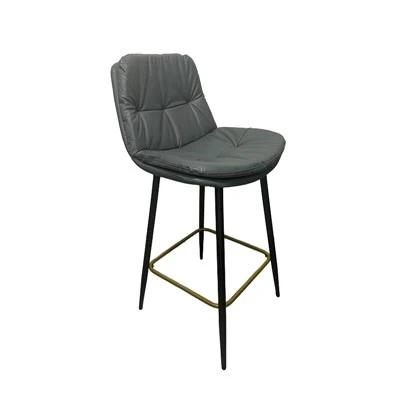
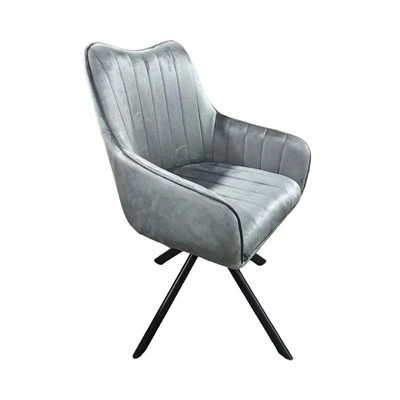
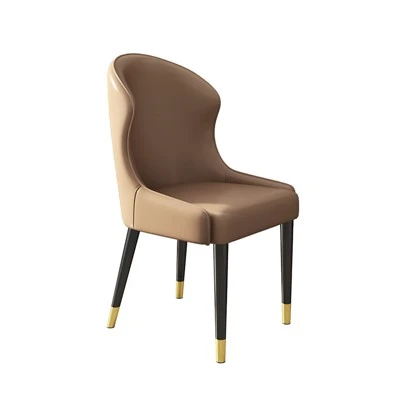
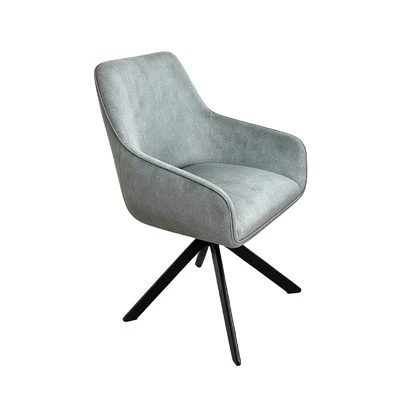
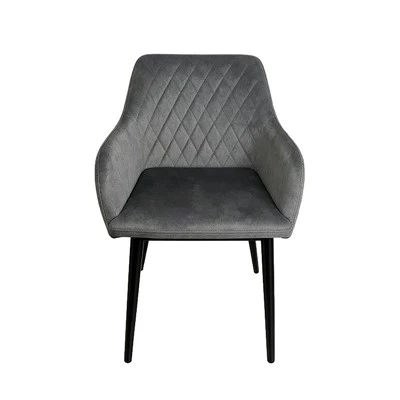
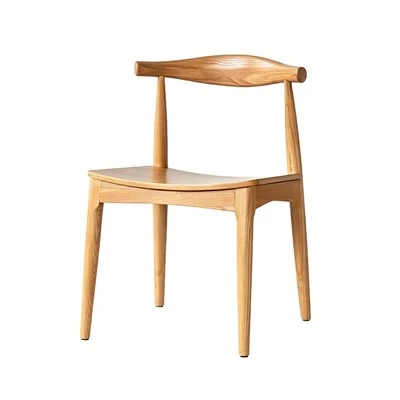
When choosing restaurant furniture, consumers often prioritize appearance and color scheme. However, the key to a dining chair's long-term usability lies in the frame material, structural design, and surface treatment. A modern Chinese-style solid wood dining chair needs to balance traditional aesthetics with modern ergonomic requirements, and the combination of a North American ash wood frame and environmentally friendly water-based paint directly impacts the product's durability and environmental adaptability.
Working Principle and Core Structure Analysis
The dining chair uses North American ash wood as its primary frame material. This wood has high hardness and modulus of elasticity, capable of withstanding the dynamic loads generated by repeated sitting. Solid wood edge banding not only enhances visual integrity but, more importantly, prevents moisture from seeping in and causing cracking. The 47cm seat width and 65cm height design conform to the standard sitting posture curve of Asian adults, while the fixed armrest structure provides elbow support while also limiting the range of usability. The application of environmentally friendly water-based paint meets indoor air quality requirements, and its open-pore finish preserves the natural grain of the wood.
How Technological Differences Affect Practical Applications
Compared to traditional veneer processes, solid wood frames, while more expensive, offer superior impact resistance; the non-rotatable design reduces the complexity of connectors while improving long-term stability; fixed handrails prevent structural loosening caused by frequent movement in public places like hotels; and the non-foldable nature results in higher overall rigidity. These design trade-offs make this product more suitable for home and hotel settings requiring long-term stable use.
Application Scenarios and Understanding the Frame
When evaluating this type of product, key considerations should include: 1) Whether the hardness grade of the main material matches the expected frequency of use; 2) The impact of joint reinforcement methods on long-term load-bearing capacity; 3) The compatibility of the surface coating type with environmental humidity; 4) The matching degree between handrail height and table height. For products in the Neo-Chinese style, the degree of integration between traditional design elements and modern ergonomics should also be considered.